An electrical circuit its a closed pattway though wich electrons flow
Key words
Voltage: its the electrical charge of battery of power supply VOLTS
Current: its the flow of electrons in the circuit AMPERES
Resitor: it's a component that opposes to the flow of electron (R)
V=IR
I= V/R
R= V/I
viernes, 28 de abril de 2017

¿Por qué pueden los robots con sensores ser útiles en el futuro?
Competencias:
· *Tengo en cuenta principios de funcionamiento y
criterios de selección para la utilización eficiente y segura de artefactos,
productos, servicios, procesos y sistemas tecnológicos de mi entorno.
Componentes:
· *Circuitos eléctricos.
· * Robot seguidor de luz.
Desempeños:
*Identifica los componentes de un circuito electro, los
diferencia y nombra sus funciones.
*Presenta un modelo de circuito que permita solucionar
problemas cotidianos.
*Propone algoritmos que permiten desarrollar un modelo robotico seguidor de luz con el objetivo de promover cambios e innovación.
viernes, 27 de enero de 2017
Tecnología
¿Por qué se cree que la programación es necesaria para las carreras universitarias a futuro?
Temas:
* Resuelvo problemas tecnológicos y evalúo las soluciones teniendo en cuenta las condiciones teniendo en cuenta las condiciones, restricciones y especificaciones del problema planteado.
Competencia ciudadana:
*identifico prejuicios, estereotipos y emociones que me dificultan sentir empatía por algunas personas o grupos y exploro caminos para superarlos.
*Contribuyo a que los conflictos entre personas y grupos se manejen de manera pacifica y constructiva mediante la aplicación de estrategias basadas en el dialogo y la negociación.
Competencias laborales:
* indentificar, ubicar, organizar, controlar y utilizar de forma racional y eficiente los recursos disponibles de la realización de proyectos y actividades.
Componentes:
* programación
* Ciclos (para y mientras)
* vectores y matrices
Niveles de desempeños:
* identifica los comandos e interpreta los procedimientos que requieren para realizar un algoritmo que cumpla con las exigencias planteadas.
*Argumenta la necesidad de utilizar ciclos en la creación de programas que cumplan con los estándares de calidad solicitadas
*Analiza algoritmos creados previamente con el fin de identificar errores y proponer alternativas de solucion.
Temas:
* Resuelvo problemas tecnológicos y evalúo las soluciones teniendo en cuenta las condiciones teniendo en cuenta las condiciones, restricciones y especificaciones del problema planteado.
Competencia ciudadana:
*identifico prejuicios, estereotipos y emociones que me dificultan sentir empatía por algunas personas o grupos y exploro caminos para superarlos.
*Contribuyo a que los conflictos entre personas y grupos se manejen de manera pacifica y constructiva mediante la aplicación de estrategias basadas en el dialogo y la negociación.
Competencias laborales:
* indentificar, ubicar, organizar, controlar y utilizar de forma racional y eficiente los recursos disponibles de la realización de proyectos y actividades.
Componentes:
* programación
* Ciclos (para y mientras)
* vectores y matrices
Niveles de desempeños:
* identifica los comandos e interpreta los procedimientos que requieren para realizar un algoritmo que cumpla con las exigencias planteadas.
*Argumenta la necesidad de utilizar ciclos en la creación de programas que cumplan con los estándares de calidad solicitadas
*Analiza algoritmos creados previamente con el fin de identificar errores y proponer alternativas de solucion.
jueves, 28 de julio de 2016
Emprendimiento
1. Dian: national taxes and costumes department.
2. When was the dian founded? In 1993
as a result from a merch of the DIN (departamento de impuestos nacionales) and
DAN (departamento de audanas nacionales).
3. Who is the legal representative of the dian? Is the
general director and it appointed by the president of the Republic.
4. Where is the headquarters? In Bogota and its
represented in 42 cities and towns in Colombia
5. How can the dian get assets? It can receive assets by
title or acquired
6. Why does the dian exist? It exist to protect the
national economic public order and the fiscal security.
7. What are the dians functions? Administration, control,
supervision, management.
8. What are the processes the dian follows?
*the
strategic process
*the mission
process
*support
*evaluation
jueves, 7 de julio de 2016
Emprendimiento
¿Qué es la fiscalidad?
*Identifica ideas de negocio para poner en marcha proyecto de vida.
*Reconoce que función desempeña la DIAN.
*Reconoce conceptos como los tributos, los impuestos, comunicación efectiva y estilos de liderazgo.
Taller
1. Whats
the DIAN?
R//The
Colombian tax and customs authority. Dirección de Impuestos y Aduanas
Nacionales de Colombia.
2. How did
it start? When?
R// it was set up as a Special Administrative Unit,
which merged the former Tax Office DIN with the former Customs Office DAN, as
of June 1, 1993.
3. What are
DIAN's assets?
R// those
it holds today, and those which it may acquire or have assigned to it in the
future, on any title.
4. Why does
DIAN exist?
R// it
exists to help to ensure the fiscal security of Colombia, and the protection of
national economic public order, through the administration and control of
compliance with tax, customs and exchange regulations, and the facilitation of
foreign trade operations, on conditions of equity, transparency and legality.
5. Who is
the DIAN's legal representative?
R//The
Director-General is the legal representative. He is allowed to delegate some of
his duties, within certain legal restrictions.
6. What are
the DIAN's functions?
R//
administers income and related taxes, stamp tax, and sales tax (IVA); it also
administers customs duties and other national-order internal taxes that are not
within the competency of other state agencies, including internal taxes on foreign
trade; and management and administration of the Customs system, including the
seizure, confiscation, or declaration of abandonment to the state of goods, and
their subsequent administration and disposal.
7. What
processes does DIAN follow?
R//it has
the following kinds of process: strategic, mission-related, support, and
evaluation.
8. What are
the processes?
R// a
series of actions or steps taken in order to achieve a particular end.
9. What are
taxes?
R// a
compulsory contribution to state revenue, levied by the government on workers'
income and business profits, or added to the cost of some goods, services, and
transactions.
10. What
are tributes?
R//Strategic
processes, Mission-related processes, Support processes, Evaluation processes.
Emprendimiento
¿Qué es la fiscalidad?
*Identifica ideas de negocio para poner en marcha proyecto de vida.
*Reconoce que función desempeña la DIAN.
*Reconoce conceptos como los tributos, los impuestos, comunicación efectiva y estilos de liderazgo.
Taller
1. Whats the DIAN?
2. How did it started? When?
3. What are DIAN's assets?
4. Why does DIAN exist?
5. Who is the DIAN's legal representative?
6. What are the DIAN's functions?
7. What processes does DIAN follow?
jueves, 2 de junio de 2016

jueves, 19 de mayo de 2016

jueves, 28 de abril de 2016
SECOND TERM: COMPUTER PROGRAMMING
DEFINITIONS:
1. Programming language: Its a lenguage used to give commands to the computer to do some operations.
2. Algorithm: Logical sequence to solve a problem.
3. Pseudo- code: Its to write the programming lenguage in english.
4. Variables: Store data in different types: (int (enteros), double (decimals), char (letras y símbolos), float (decimals), string (cadena de caracteres))
5. Library: Its the set of instructions for a specific purpose.
6. Cycle: Repetition of instructions a defined number of times.
7. Loop: Repetition of instructions that doesnt have an end.
2. Algorithm: Logical sequence to solve a problem.
3. Pseudo- code: Its to write the programming lenguage in english.
4. Variables: Store data in different types: (int (enteros), double (decimals), char (letras y símbolos), float (decimals), string (cadena de caracteres))
5. Library: Its the set of instructions for a specific purpose.
6. Cycle: Repetition of instructions a defined number of times.
7. Loop: Repetition of instructions that doesnt have an end.
jueves, 21 de abril de 2016
Formas de financiar tu negocio
1.
Crédito bancario: conseguir un préstamo bancario es una de las vías
de financiación más complicadas para iniciar una aventura empresarial. solo
lograrán obtener dinero a través de este cauce los proyectos muy solventes,
trabajados y realistas, en los que se especifique de forma muy precisa para qué
se quiere el dinero y cómo se va a devolver.
2. Familia y amigos: Otra
de las maneras que sirven a un emprendedor a conseguir dinero es lo que se
conoce como FFF ( Friends, fools, family); es decir, al entorno cercano del
empresario, de donde también suelen salir las grandes ideas. Gracias
a ello, este tipo de financiación permite una gran flexibilidad para devolver
el dinero prestado y no exige explicaciones acerca de a qué se va a destinar.
3. Business Angels: Son
una de las figuras más destacadas dentro del universo del emprendimiento. Se
trata de inversores privados que apoyan proyectos en varias áreas: el capital,
la experiencia y los contactos. "Aunque ponen su dinero, su perfil es más
de empresario y mentor que de inversor propiamente dicho. Por tanto, tienen un
carácter informal".
4. Capital Riesgo: son
la otra fuente de financiación profesional a través de una sociedad o de un fondo.
Su forma de ayudar es entrando en el capital de empresas que no cotizan en la
bolsa. no se juegan el dinero en cualquier negocio. el capital riesgo sí exige
que el proyecto sea rentable y un beneficio por la inversión realizada. Por
tanto, busca empresas en funcionamiento y con fuerte potencial de crecimiento.
5. Crowdfunding: Se
trata de una vía de financiación colectiva y online. "El emprendedor
solicita dinero a una colectividad (a todos aquellos que puedan estar
interesados en su proyecto) normalmente a través de internet”. Gracias a
internet y las redes sociales se multiplican las posibilidades de financiación,
Este
tipo de financiación suele ser discontinua y, por tanto, no se puede
planificar. De ahí que no sirva para hacer proyecciones a futuro.
6. Préstamo participativo: En
este tipo de financiación, el dinero y el proyecto van de la mano. "El
prestamista realiza una apuesta por el proyecto y une su suerte a la del
emprendedor participando en él", apunta el estudio. Pero
no se puede olvidar que quien pone el dinero encima de la mesa exige llevarse
parte del beneficio obtenido y, habitualmente, el cobro de un interés fijo.
Hay muchas formas de financiar un negocio, no hay que tener miedo de comenzarlo, con las ganancis de tu negocio podras pagar luego a los que te prestaron el dinero, empieza ahora!
jueves, 3 de marzo de 2016
jueves, 25 de febrero de 2016
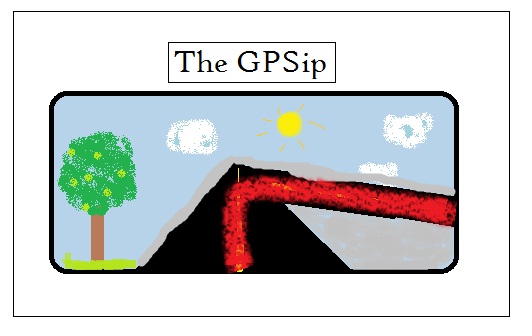
The GPSip
No more looking down while driving!
With your brand new GPSip get rid of looking down to see your ordinary GPS while driving,which is very dangerous.The GPSip is the window itself! so you can drive relaxed because its showing you which way to go, making it easier and safer.

With your brand new GPSip get rid of looking down to see your ordinary GPS while driving,which is very dangerous.The GPSip is the window itself! so you can drive relaxed because its showing you which way to go, making it easier and safer.
jueves, 18 de febrero de 2016
Information and communications technology (ICT)
They help
us to communicate with everyone around the world, and basically connect us with
the whole world. For example:
*Computer:
Help us communicate and be aware of everything that is happening right now in
the world.
*Cellphone:
It can be like a little computer and it can help us communicate via online,
text and over the phone
.
*Tablets:
They are like a handy computers and do the same as computers but they are
tactile.
*Smartwatch:
it’s like a watch but it has a lot more uses, it can help you count calories,
how much you walked or just give you the time.
*News: It
informs us about everything that is happening, good and bad, sometimes it alert
us and it can be written on paper or you can check it online.
*Radio: It’s
like a newspaper but its people speaking, you can listen to it all day and it
has a lot of topics, it can be news, music, sports and much more.
*TV: TVs can
inform us about a lot of things, it can present news, documentaries, talk shows
and more. It help us learn a bunch of different stuff.
*GPS: They
can tell us how or what ways to take for your destination, they can tell you
where, the time, basically anything about a person, object or a place.
*Drones: It’s
a practical way of cameras because of their size, it can be used for security,
to take pictures or film movie scenes.
*Robots: Robots
are everything, they do humans work, sometimes faster and better.

Suscribirse a:
Entradas (Atom)